Autonomy vs Micromanagement: Why We Chose Trust First
Let’s be honest from the start: trusting people before controlling them isn’t the natural instinct. In an industry where mistakes are costly and timelines are tight, the most common management reflex is to want to validate everything, review everything, follow everything closely. It feels safer. We get it, because it’s a reflex we have too, and one we have to actively work against.
At A+, we’ve chosen a different direction: trust before control. It’s not something we’ve mastered. It’s not something we’ve figured out once and now apply perfectly every day. It’s a goal we set for ourselves, a management discipline we try to hold even when it would be easier to just take back the reins. And no, that doesn’t mean we let people loose and cross our fingers.
Vague isn’t the same as autonomous
There’s a confusion that comes up often when people talk about autonomy at work: they assume it means an absence of structure. Nobody explaining the mandate, nobody to turn to when something’s stuck, nobody noticing whether things are going well or not. In that version, autonomy looks more like disguised abandonment than an actual way of managing.
That’s not what we do. Autonomy at A+ means a clear framework, a well-understood objective, and then the latitude to decide how to get there. The difference between that and vagueness is that in one case you’re equipped, and in the other you’re left to figure it out alone. We invest time upfront so the mandate is clear, expectations are named, and the necessary resources are accessible. Once that’s done, we step back and let the person decide on the how.
Micromanagement, on the other hand, usually comes from a good intention: making sure things get done right. Nobody wakes up in the morning planning to stifle their team, and honestly, we’re the first ones who have to hold ourselves back when a worry pushes us to want to re-check everything. The problem is that, in practice, it sends a clear message to the person on the receiving end: we don’t trust you to deliver without constant supervision. Repeated long enough, that message becomes true, even if it wasn’t at the start. People stop taking initiative because there’s no point, the final call was never really theirs. They stop proposing ideas, they start waiting for instructions, and the company ends up with a competent but passive team. That’s not a talent problem, it’s a management structure problem, and it’s exactly the trap we try to avoid, fully aware that we’re not immune to falling back into it.
Why control feels reassuring, but isn’t
Control gives the illusion of safety. If I approve every decision, nothing can slip past me. It’s a constant temptation, especially when a project is running tight on time or the stakes are high. But in a design-build project, where several disciplines move forward in parallel, that reflex ends up creating the opposite of what it’s meant to protect. Every approval adds a delay. Every delay adds friction. And friction, in our line of work, translates directly into costs and timelines slipping, exactly what we’ve promised never to let happen.
Control also has a cost we measure less often: it slows down people’s growth. Someone who has never had to make a tough call on their own will never get the chance to build that muscle. They’ll stay dependent on approval, not because they need it, but because they were never given the chance to do without it. We know this, we’ve seen it happen, and it’s a big part of why we push ourselves to do things differently, even though the old reflex still feels tempting some days.
What the science says about motivation
We’re not inventing anything here. Daniel Pink laid this out in Drive, published in 2009. His argument: lasting motivation, the kind that doesn’t fade after the first bonus or pat on the back, rests on three pillars. Autonomy. Mastery, meaning real progress in something that genuinely matters to the person. And purpose, understanding why the work matters beyond the task itself.
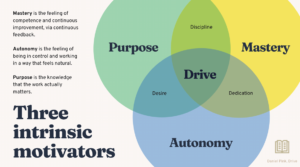
Take autonomy out of that equation and the other two pillars collapse too. It’s hard to build real mastery on a mandate where every decision gets approved by someone else, because mastery is built through the exercise of judgment, not through executing instructions. It’s hard to feel a sense of purpose in your work when you have no real say in how it gets done, because purpose comes largely from the feeling of having contributed to something, not just having taken part in it.
Pink also gave a TED talk on the subject, The Puzzle of Motivation, which remains one of the simplest ways to see this argument visually if the full book feels like too much right now. What’s interesting in his case is that it draws on studies showing that classic motivation levers, like one-time financial rewards, work well for mechanical, repetitive tasks, but become counterproductive as soon as the work calls for judgment, creativity, or problem-solving. Which is exactly the kind of work we do at A+, on the design side as much as on the site.
What that looks like in practice at A+
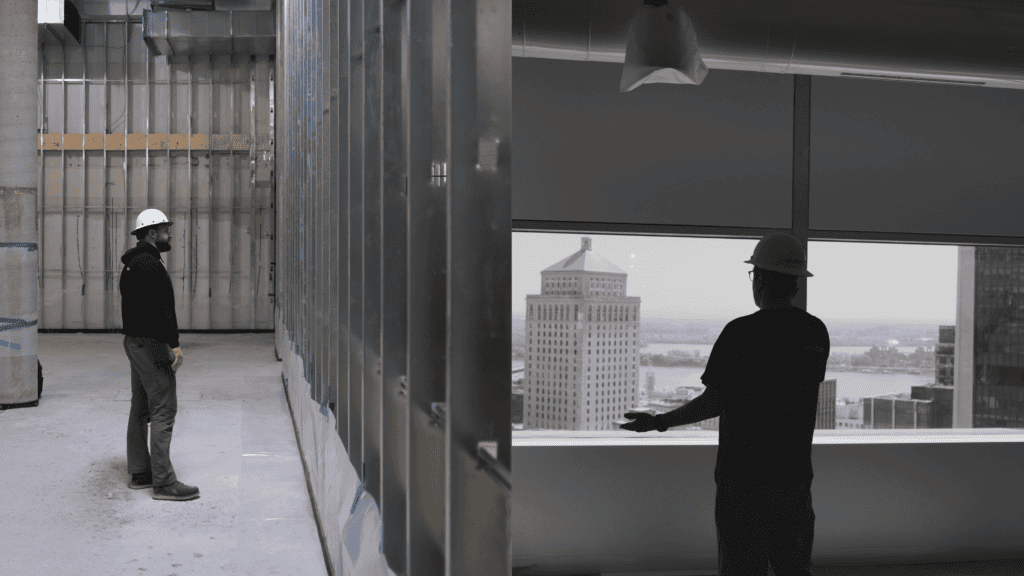
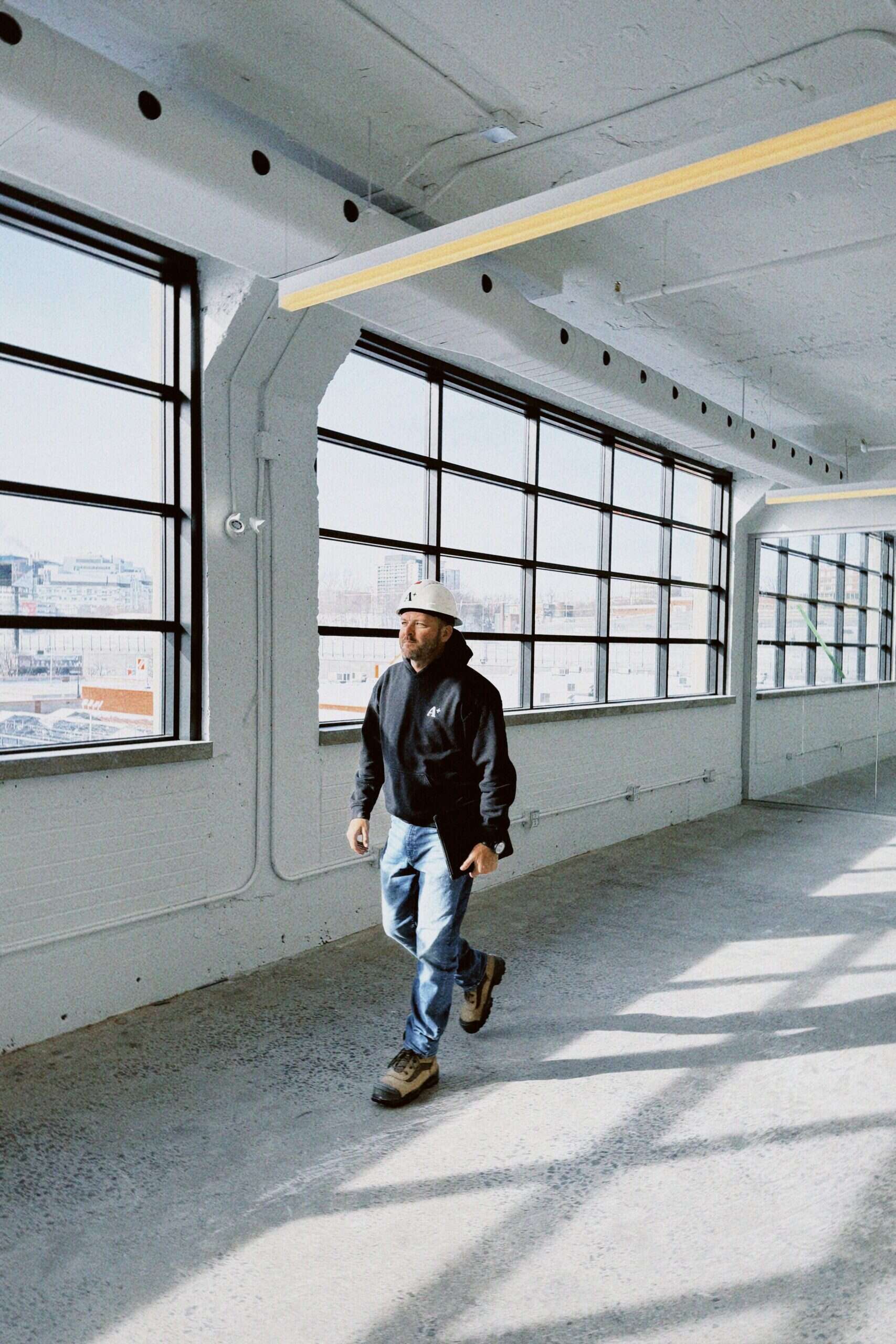
In design-build, we run projects where several disciplines work together under one roof: design, engineering, project management, construction. That means decisions get made quickly, often out in the field, without the luxury of waiting for three approvals before moving forward. A site doesn’t stop because an unexpected issue is waiting on an approval that will take two days to work its way up the chain.
Trusting people before anything else, in that context, isn’t a philosophical luxury, it’s what keeps a team agile, one of the five pillars we try to keep at the center of everything we do. A project manager who has to get everything approved before deciding isn’t agile, they’re waiting. A superintendent who doesn’t have the latitude to react to something unexpected on site slows down everyone behind them, from the designer to the engineer to the client waiting for an answer. We know this. We don’t always live up to that principle in the heat of the moment, but it’s the direction we keep pulling ourselves back toward.
Accountability, for us, means that when we hand someone a mandate, the responsibility for the outcome comes with the freedom to choose how to get there. You’re not left alone, though. The framework is there, the team is there, our vertical structure means you always know who can help if something’s stuck. But the final call, within your area of responsibility, belongs to you, or at least that’s what we aim for whenever we can make it happen.
That also means accepting that things won’t always get done exactly the way we would have done them ourselves. That’s probably the hardest part of this approach, and we won’t pretend it’s easy, or that we get it right every time. Trusting people means accepting some variation in how things get done, in exchange for real ownership of the outcome. Some days, that’s easier said than done.
What it enables for our people
This approach, when we manage to hold it, has a direct effect on how people grow with us. When trust is real, people step into their role faster. They try different ways of doing things, they learn from their own decisions rather than executing someone else’s, and they develop real mastery, not just a skill for following instructions. A mistake becomes a chance to adjust, not an excuse to take back control on their behalf. That’s the ideal we’re working toward, not something we claim to nail every time.
It’s also, we hope, what keeps someone engaged past the first six months, once the novelty of the role wears off. The sense of purpose Pink talks about, contributing to something real, only builds when you have genuine say over your work. Someone who feels like they’re just executing decisions made elsewhere eventually disengages, even if the pay and conditions stay good. Someone who feels like they’re building something, with a real say in the how, stays engaged longer because the work belongs to them a little.
For us, it’s also a matter of long-term retention of good people. The skilled ones, the ones we actually want to keep, are exactly the ones who leave a micromanaged environment the fastest. They have the skills to go elsewhere, and an environment that doesn’t trust them won’t hold onto them for long. This connects directly to another strategic pillar for us, talent density: autonomy is what turns a good employee into a cornerstone of the team, not the other way around.
What we’re not claiming
We’re not claiming that trust removes the need for structure or follow-up. We keep a clear framework, we stay accountable, we name what’s not working without dancing around it. Trust also isn’t handed out unconditionally from day one: it’s built, it’s demonstrated, and it adjusts based on each person’s experience and context. A new superintendent won’t have the exact same latitude as a ten-year veteran, and that’s not a contradiction of our approach, it’s just common sense.
We’re also not claiming we’ve got this figured out. There will be days when someone here takes back a decision they should have let go. There will be projects where pressure pushes us to re-check more than we’d like. This isn’t a principle you check off once and forget, it’s a tension we keep actively alive, on purpose, because the natural reflex will always pull us back toward control.
The basic principle stands, regardless: we start from the assumption that the person in front of us is capable, and we try to build our management approach from there instead of from doubt. It’s not intuitive. It’s not easy. But it’s the kind of goal worth chasing, even imperfectly, rather than abandoning because it’s simpler to control everything.


Frequently asked questions
In the traditional model, you sign separate contracts with the architect, engineers and contractor, each defending their own interests. With integrated project delivery, a single team designs and builds your space under one contract, with a shared target budget and open-book transparency. You make the decisions; we coordinate execution from start to handover.
Coordinating the architect, engineers and trades yourself means juggling multiple contracts, multiple invoices and shared blame when something goes wrong. With one contract, you have a single point of contact accountable for budget, schedule and outcome. The expertise is already aligned and used to working together, which removes the coordination errors that drive most delays.
We set a target budget at the drawing stage using real data from comparable projects, then design within that budget instead of discovering the price at the end. The agreed price does not change unless you request modifications or different materials. Any hidden condition we uncover along the way is on us.
No. The total cost is usually lower and, above all, more predictable. Bringing design and construction under one contract removes stacked margins, the change orders that come from conflicting drawings, and rework. Open-book transparency shows you where every dollar goes. You pay the real cost of the work, not a chain of middlemen.
Timelines depend on size and complexity, but the integrated approach shortens them because design and construction advance in parallel rather than in sequence. As an example, we delivered the 14 Red Bull Music Academy studios in 18 days. By the second meeting you already have a preliminary budget and drawings to plan around.
Far less than with several vendors to coordinate. You have one point of contact who manages the architect, engineers and trades for you. You keep the important decisions; we handle the daily coordination, follow-ups and on-site surprises. In practice, your role comes down to approving key milestones on an agreed communication routine.
We fit out commercial spaces of every kind: offices, medical clinics, restaurants, retail and industrial spaces, across Greater Montreal and up to roughly 90 minutes from the surrounding region. Our projects run from about 2,000 to 60,000 square feet. Our work includes studios, clinics, factories and pre-built suites for landlords and brokers.
The budget agreed at the drawing stage is guaranteed: any overrun that does not come from a change you requested is on us, not you. Hidden conditions uncovered on site are our responsibility too. For schedule, phased planning and one integrated team cut delays at the source. We deliver turnkey, so your teams can move in the next day.